How to Use a Mortar and Pestle: A Beginner's Guide
Learn how to use a mortar and pestle properly: how to grind spices, crush garlic and make pastes, plus seasoning, cleaning and common fixes.
The short answer: crush first, grind second
A mortar and pestle crushes and grinds rather than cuts, and that is the whole point. Crushing whole spices ruptures the cells and releases their oils, so you get a fuller aroma and a more uneven texture than a blade grinder gives you — exactly what you want for curry pastes, pesto, cracked pepper and garlic.
The method, in one line: pound, then grind. Put a small quantity in the bowl (the mortar), press the pestle down firmly a few times to break the pieces, then work it in small circles with steady downward pressure until it reaches the texture you want. Keep the bowl about a third full, add hard dry ingredients before soft wet ones, and stop at the texture you actually need rather than grinding everything to a paste by habit.
What you need before you start
Nothing here is specialist kit, but a few small things make the job much easier:
- A mortar and pestle with an unglazed, slightly rough interior. Smooth glazed bowls look lovely but let seeds skate about; they are fine for garlic and soft herbs, frustrating for cumin.
- Coarse sea salt, for grip when grinding slippery seeds and for scrubbing the bowl afterwards.
- A dry frying pan, if you want to toast whole spices before grinding.
- A small dry bowl or plate to tip the ground spice into.
- A damp cloth or nonslip mat to sit under the mortar so it stays put.
- A small flexible spatula, for scraping the paste down off the walls.
- A fine sieve (optional), for lifting out husks from cardamom or cumin.
How to use a mortar and pestle, step by step
-
01 /
Set the mortar on a stable surface
Put a damp cloth or a rubber mat under the bowl. Work at a comfortable height, with the mortar directly in front of you rather than off to one side, so you can press straight down without it sliding.
-
02 /
Start with a clean, dry bowl
Any moisture left in the mortar makes dry spices clump and stick. Wipe it out and let it air dry fully before grinding anything hard and dry.
-
03 /
Add a small quantity — about a third full
Overfilling is the single biggest mistake. If the bowl is too full, the pestle just pushes the pile around the sides instead of crushing it. Grind in two or three small batches if you need more.
-
04 /
Toast whole spices first, then let them cool
Dry-fry seeds and pods in a pan over a medium heat for a minute or two, until they smell warm and nutty, then tip them onto a cold plate. Grind only once they are completely cool — warm spices smear and clog the surface.
-
05 /
Pound to break the pieces
Hold the pestle with your palm over the top for control and press down firmly four or five times, working around the centre of the bowl. This is a pressing action, not a hammering one — keep your other hand well clear.
-
06 /
Add a pinch of coarse salt for slippery seeds
A quarter-teaspoon of coarse salt gives small, hard seeds something to grip against, so they crush instead of scattering. It also seasons whatever you are making, so account for it later.
-
07 /
Grind in small circles and scrape down
Switch to a circular motion, keeping the pestle pressed against the base and moving steadily around the bowl. Scrape the walls down with a spatula every 20 to 30 seconds so nothing escapes the grinding zone.
-
08 /
Stop at the texture you want and empty the bowl
A coarse crack for steak or a fairly fine powder for a spice rub takes anywhere from 30 seconds to a few minutes. Tip the contents out promptly and tap the bowl clean — leaving spices sitting in the mortar lets their oils settle into the stone.
How to handle different ingredients
| Ingredient | First move | Watch out for |
|---|---|---|
| Whole spices (cumin, coriander, cardamom) | Toast, cool completely, then pound | Warm seeds clog the surface; cardamom husks are easier to pick out after a light crush |
| Peppercorns | One firm press to crack, then grind in circles | Stop early for a coarse crack; keep going for a finer grind, in small batches |
| Garlic and ginger | Chop roughly, add a pinch of salt, then pound | Fibrous ginger is easier grated first if you want a smooth paste |
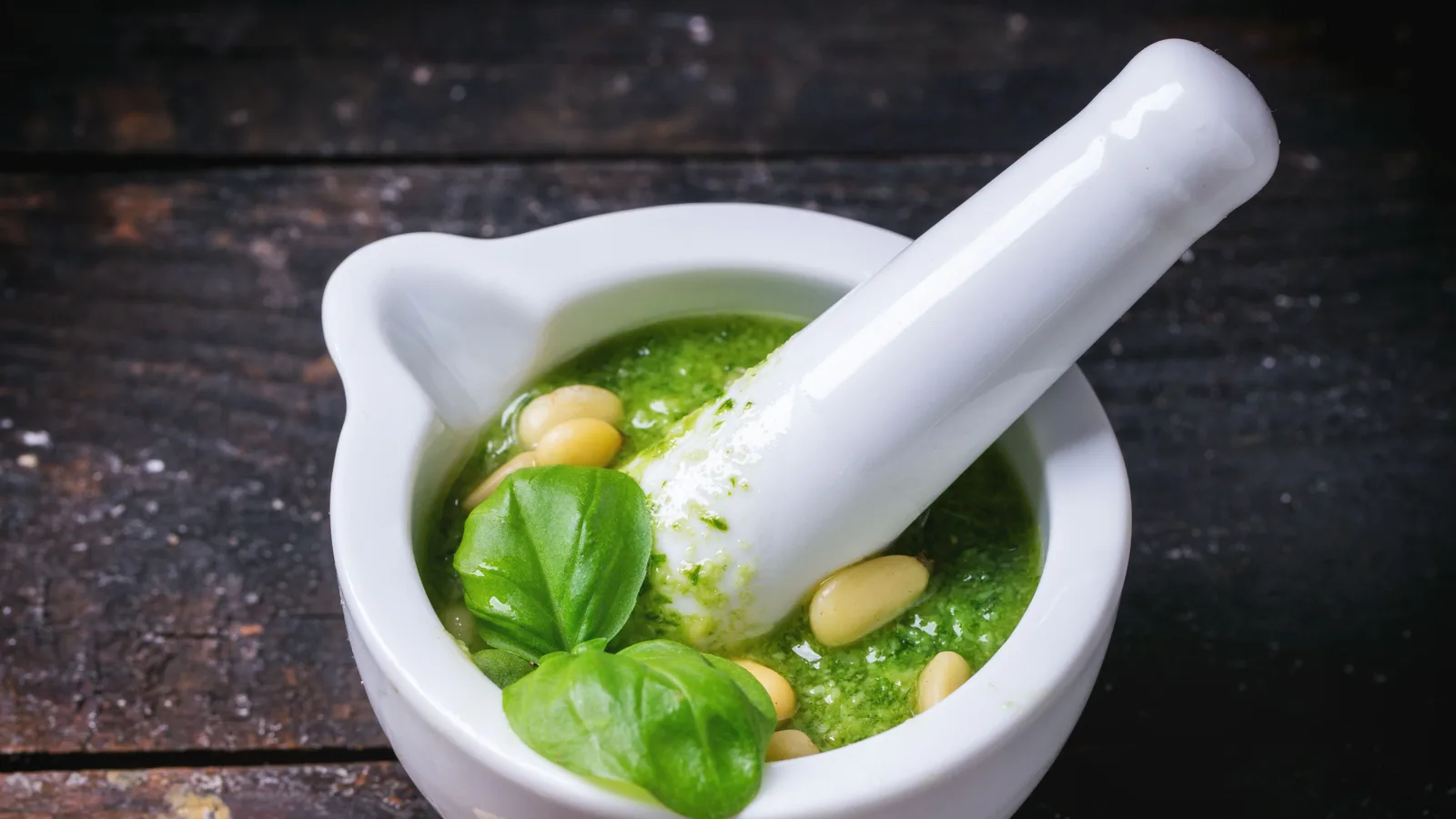
| Fresh herbs | Pound tough herbs such as rosemary; chop soft ones | Basil bruises and darkens quickly — pound briefly with salt and oil for pesto |
| Nuts and seeds | Short, firm taps rather than long grinding | Stop before they turn to butter; a little sugar or salt helps them break down evenly |
| Dried chillies | Break into pieces, then pound with the seeds | Wash your hands thoroughly afterwards and keep them away from your eyes |
Seasoning a new mortar and pestle
A brand-new unglazed stone mortar often carries loose grit from the manufacturing process. Seasoning smooths the surface and clears it out. Glazed ceramic, glass and wooden mortars do not need this — a wash and a thorough dry is enough.
-
01 /
Wash and dry it fully
Rinse with warm water and a stiff brush. Skip the washing-up liquid on unglazed stone, which is porous and will hold onto the scent. Leave it to dry overnight.
-
02 /
Grind a handful of raw rice
Put a small handful of uncooked white rice in the bowl and grind it to a powder, then tip it out. Repeat until the powder comes out clean rather than grey and gritty.
-
03 /
Scrub with coarse salt
A tablespoon of coarse salt, ground in circles for a minute, lifts loose grit out of the pores. Tip it out and wipe the bowl.
-
04 /
Rinse, dry and repeat if needed
Rinse with hot water, dry thoroughly and leave it open to the air. Wooden mortars benefit from a thin coat of food-safe oil once dry; stone should be left bare.
Match the material to the job
| Material | Good for | Caveat |
|---|---|---|
| Granite | Hard spices, pastes, everyday heavy use | Heavy and porous; needs seasoning and thorough drying |
| Basalt | Fine grinding of spices and pastes | Also porous, and just as heavy as granite |
| Marble | Soft ingredients, gentle crushing, serving | Softer surface that stains and dulls with acidic ingredients such as citrus or vinegar |
| Glazed ceramic | Garlic, herbs, small quantities, table use | The smooth glaze lets hard seeds slide instead of crushing them |
| Wood | Garlic, herbs, gentle bruising | Absorbs odours and moisture; never soak it or leave it damp |
Common mistakes and how to fix them
- Filling the bowl to the top. The pestle rides over the top of the pile instead of crushing it. Tip half out and work in batches.
- Grinding damp ingredients before dry ones. Residual moisture and oil coat the surface and turn the next batch of spice into a paste. Do dry work first, or rinse and dry between jobs.
- Using a decorative glazed bowl for hard spices. Round seeds skate across the glaze. Use a rough-surfaced stone mortar for anything hard, and keep the pretty one for garlic and herbs.
- Grinding warm spices straight from the pan. They clump and stick. Let them cool on a plate first.
- Adding liquid in one go when making a paste. Add a teaspoon at a time, only when the mixture stops moving freely.
- Leaning on the pestle with the bowl unbalanced. Pressure at an angle is what cracks rims. Steady the bowl with a cloth underneath and press straight down.
- Leaving the contents in the bowl. Spice oils and garlic linger in porous stone. Empty and rinse it soon after you finish.
Cleaning, drying and storing
Rinse the mortar and pestle promptly with hot water and scrub with a stiff brush. On unglazed stone and wood, avoid washing-up liquid — porous surfaces absorb it and release the smell into your next batch of cumin. For glazed ceramic and glass, a drop of washing-up liquid is fine.
For lingering garlic, chilli or spice smells, grind a tablespoon of coarse salt with a little bicarbonate of soda, tip it out, then rinse thoroughly. Dry everything with a cloth and leave it open to the air until completely dry — stone holds moisture in its pores, and a damp mortar stored in a cupboard will smell stale within days.
Store the pestle out of the bowl or resting loosely inside it, not wedged in, so air can circulate. Keep stone and wood out of the dishwasher and away from sudden temperature changes.
Frequently asked questions
Do I have to season a mortar and pestle before using it?
Only unglazed stone ones need it. Glazed ceramic, glass and wooden mortars just need a wash and a thorough dry — grinding rice through them achieves nothing except a wasted handful of rice.
Can I grind coffee beans in a mortar and pestle?
Yes, but it is slow and the result is uneven. Roasted beans are brittle, so pound them first and then grind in small batches. It works for a coarse cafetière grind; it is a frustrating way to make espresso.
Why does my pestle keep slipping?
Usually the bowl is overloaded or the interior is smooth and glazed. Tip out half the contents and put a damp cloth under the mortar so the whole thing stays still while you press.
Is a mortar and pestle better than an electric spice grinder?
For control, small quantities and wet pastes, yes. For large batches of very fine powder, a grinder is quicker. The mortar gives a coarser, more uneven grind with more aroma, at the cost of a few minutes of arm work.
How do I get the smell of garlic or chilli out of a stone mortar?
Grind coarse salt with a little bicarbonate of soda, rinse with warm water and leave it open to the air until bone dry. Sealing a damp mortar away in a cupboard is what makes the smell stick.