How to make a vinaigrette dressing that won't split
Learn how to make a vinaigrette dressing that emulsifies properly, with the classic 3:1 ratio, a five-step method, fixes for splitting and storage advice.
The short answer: oil, acid and a pinch of salt
A vinaigrette is a cold sauce made from oil and an acid, usually vinegar but sometimes lemon juice, seasoned with salt and pepper. The classic starting point is three parts oil to one part vinegar by volume, not by weight. For a small batch, that means 3 tbsp olive or rapeseed oil to 1 tbsp white wine or cider vinegar.
Treat the ratio as a dial rather than a law. A sharper dressing for bitter leaves sits closer to 2:1; a softer one for delicate herbs sits closer to 4:1. Mustard, honey, garlic and chopped herbs are additions, not requirements.
What you need before you start
You do not need special equipment. A small bowl and a whisk, or a clean jam jar with a tight-fitting lid, will do the job; a fork works if you whisk briskly. Measure by tablespoons so the ratio stays honest. Guessing is the most common reason a dressing tastes either harsh or flat.
A batch made with 3 tbsp oil and 1 tbsp vinegar makes roughly 4 tbsp of dressing, enough for a salad for two to four people depending on how heavily you dress it.
- Oil
- 3 tbsp; olive oil for flavour, rapeseed or sunflower for a neutral base
- Vinegar
- 1 tbsp; white wine, cider, sherry or balsamic
- Salt
- A pinch of fine sea salt, about 1/8 tsp
- Mustard
- 1 tsp Dijon, optional but helps the emulsion
- Pepper
- Freshly ground black pepper, to taste
- Equipment
- Small bowl and whisk, or a lidded glass jar
Choose your ratio: 2:1, 3:1 or 4:1
The ratio changes the character of the dressing more than any single ingredient. Use the table as a starting point, then taste. The quantities are for 1 tbsp of vinegar, so they scale easily: double everything for 2 tbsp vinegar, and so on.
| Style | Oil | Vinegar | Good with |
|---|---|---|---|
| Sharp (2:1) | 2 tbsp | 1 tbsp | Bitter leaves, strong cheese, robust salads |
| Classic (3:1) | 3 tbsp | 1 tbsp | Everyday green salads, grains, warm potatoes |
| Mellow (4:1) | 4 tbsp | 1 tbsp | Delicate herbs, fish, cold vegetables |
How to make vinaigrette dressing: step by step
-
01 /
Dissolve the salt in the vinegar
Put a pinch of salt into the bowl and pour over the vinegar. Stir for a few seconds until the grains disappear. Salt dissolves in the vinegar but not in oil, so adding it at the end leaves gritty specks at the bottom of the bowl.
-
02 /
Add mustard and any other seasoning
Whisk in a teaspoon of Dijon mustard if you are using it, plus pepper and a little honey or crushed garlic if you want them. Mustard helps hold the oil and vinegar together, but it is not essential. If you leave it out, keep a teaspoon of cold water nearby to help the emulsion.
-
03 /
Whisk the oil in slowly
Start with a few drops of oil, whisking constantly. When the mixture begins to look creamy, add the rest in a thin, steady stream while whisking. Tipping in all the oil at once makes a split dressing much more likely. In a jar, put in all the ingredients, seal the lid and shake hard for 20–30 seconds.
-
04 /
Taste and adjust
Taste a drop on a spoon or a piece of lettuce. Too sharp? Whisk in another tablespoon of oil. Flat? Add a little more salt. Harsh or bitter? A pinch of sugar or a drop of honey rounds it off. Too oily? Add vinegar a teaspoon at a time.
-
05 /
Use it or store it
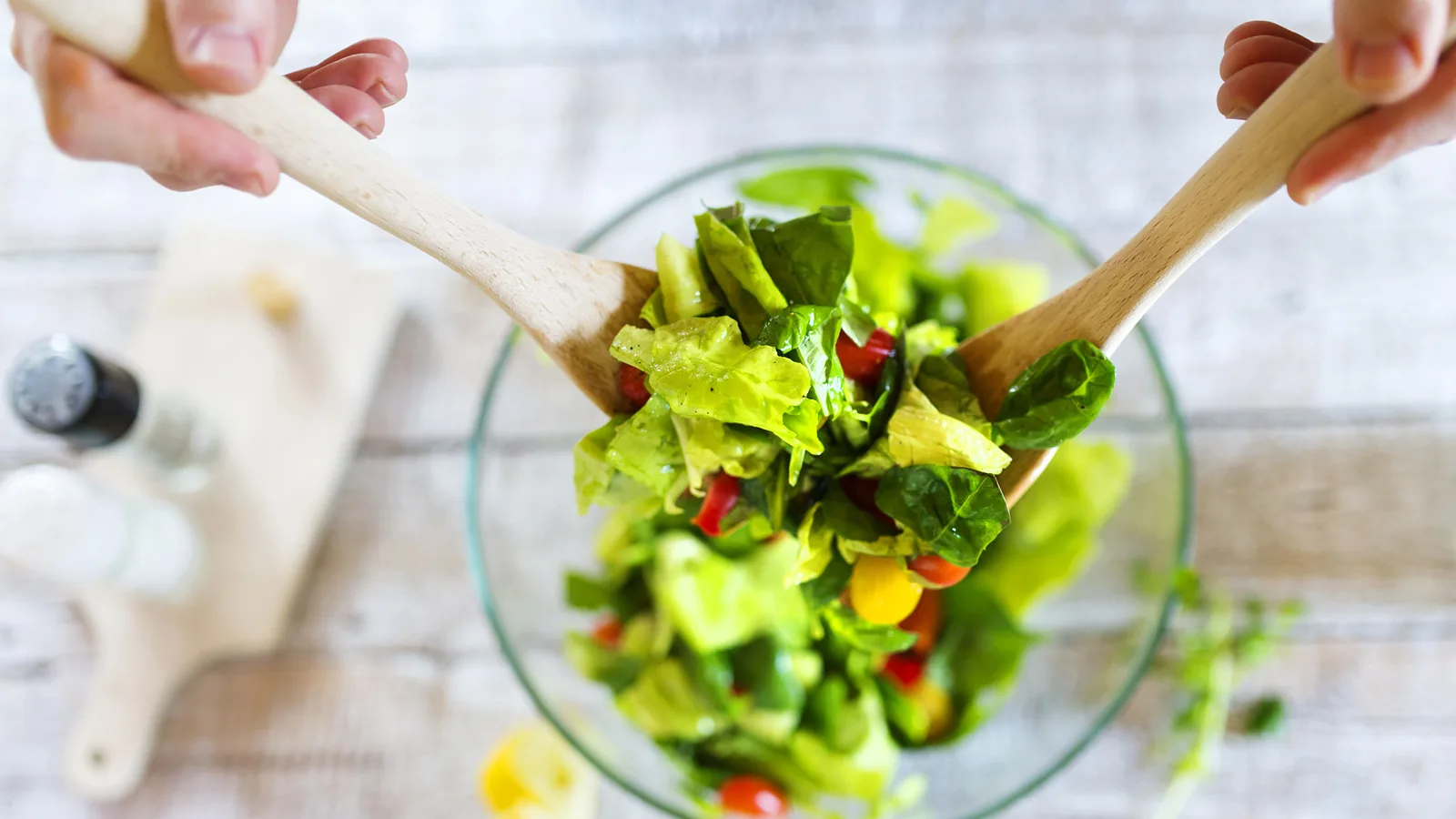
Toss salad leaves just before serving so they do not wilt. Pour leftovers into a clean glass jar, seal and refrigerate. Shake well before each use, and let the jar stand for 10 minutes out of the fridge if the oil has thickened.
Why vinaigrette splits — and how to bring it back
A split dressing is not ruined. The oil has simply pooled out of the emulsion, usually because it was added too quickly or because there was not enough mustard or water to hold it.
- Whisk a teaspoon of water or mustard into a clean bowl, then drizzle in the split dressing while whisking constantly.
- Or put the split dressing into a jar with a teaspoon of water, seal and shake hard.
- If the dressing is cold, let it stand at room temperature for 10 minutes first; cold oil is thicker and harder to emulsify.
Adjust the flavour without upsetting the balance
Once you have the basic method, change one thing at a time and taste as you go.
- Acid: replace half the vinegar with lemon juice for a brighter dressing, or use balsamic for sweetness. Keep the total amount of acid the same at first.
- Sweetness: a pinch of sugar or a little honey softens a sharp vinegar. Add it after tasting, not before.
- Mustard: Dijon blends smoothly; whole-grain mustard adds texture. Use about 1 tsp per 1 tbsp of vinegar.
- Garlic and shallot: grate or crush them finely and use sparingly. Let them sit in the vinegar for 10 minutes before adding the oil to soften their bite.
- Herbs: chop soft herbs such as parsley, chives, tarragon or basil just before serving. Woody herbs such as thyme need a little time in the dressing to release their flavour.
Common mistakes and how to avoid them
- Adding the oil too fast. The dressing splits. Fix it by whisking a teaspoon of water into a clean bowl and drizzling the split dressing back in.
- Salting at the end. Salt does not dissolve in oil. Salt the vinegar first.
- Using cold oil straight from the fridge. It is thicker and harder to emulsify. Let it stand for 10 minutes, or shake the jar harder.
- Dressing the salad too early. Leaves wilt and the dressing pools at the bottom. Toss at the table.
- Storing in a metal container. Acid can react with some metals. Use a glass jar with a tight lid.
- Making a very large batch. A vinaigrette is quick to make; small, frequent batches taste fresher and are easier to adjust.
Storage and food safety
Keep vinaigrette in a clean glass jar with a tight lid in the fridge. A basic oil-and-vinegar dressing is usually best within a week; if you have added fresh garlic, shallot or herbs, use it within 3–4 days. Write the date on the jar if you make a larger batch.
Before serving, let it come to room temperature for about 10 minutes and shake hard. If the oil has solidified, stand the jar in a bowl of warm water for a few minutes. Do not microwave the jar.
Discard any dressing that smells rancid, looks mouldy or has been left out overnight.
Vinaigrette questions
Can I make vinaigrette without mustard?
Yes. Mustard helps the emulsion, but a teaspoon of cold water or a hard shake in a jar will also bring it together. Add the oil slowly either way.
Should I use lemon juice or vinegar?
Either works. Lemon juice is sharper and gives a brighter taste; use the same volume as vinegar, then taste and adjust. Half lemon juice and half vinegar is a good middle ground.
How much dressing should I put on a salad?
Start with about 1 tbsp per two generous handfuls of leaves, toss thoroughly and add more only if the leaves still look dry. It is easier to add than to rescue an over-dressed salad.
Why does my vinaigrette taste bitter?
The oil or vinegar may be too assertive, or the dressing may need salt. Try a milder oil, swap half the vinegar for lemon juice, or add a pinch of sugar. Bitter leaves such as chicory and radicchio also make the dressing taste sharper.
Can I make vinaigrette in a blender?
Yes, but a blender whips in air and can make the dressing cloudy and thick. A bowl and whisk or a jar gives more control; if you do blend it, pulse briefly rather than running it for a long time.